Why A British Swimmer Risked His Life In War-Hit Strait Of Hormuz
British endurance swimmer Lewis Pugh has used a series of swims in the Strait of Hormuz to draw attention to the environmental damage caused by the ongoing conflict. On Saturday, he urged those involved to end the fighting, restore shipping through the strategic waterway and remove the pollution caused by attacks on vessels.
Full article
In a post on his website, Pugh warned that repeated strikes on oil tankers, gas carriers and commercial ships could have lasting consequences for the marine environment, with the damage potentially affecting future generations.
The 56-year-old, who serves as the UN Environment Programme's patron of the oceans, spent three days swimming near Oman's coastline to highlight the threat to the region's marine ecosystem.
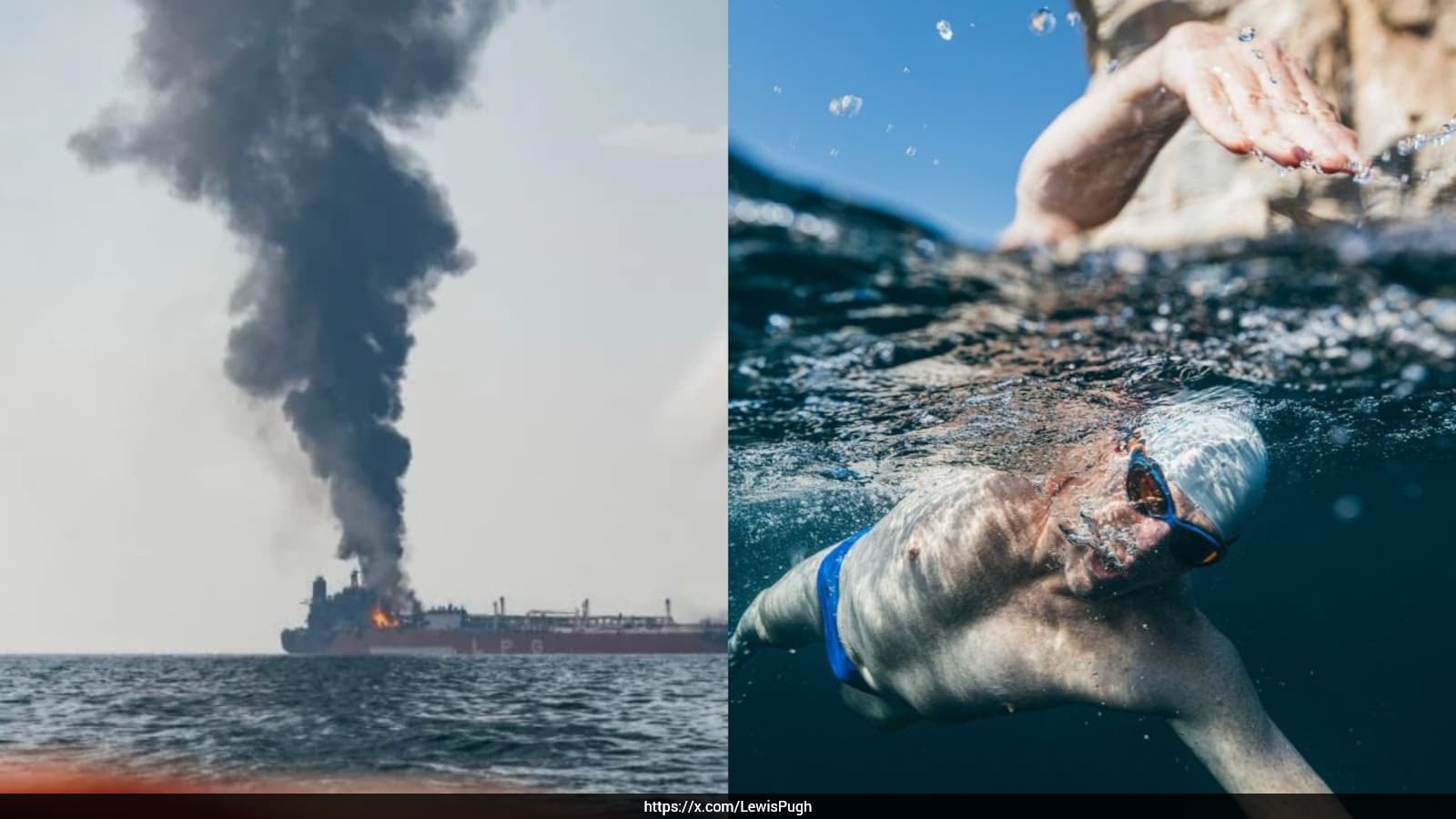
I have just completed a three-day swim through the Strait of Hormuz to draw attention to the devastating environmental consequences of war. Just 30 minutes after I began swimming, an oil tanker was struck a few kilometres away. The explosions rocked the sea around me. Over the following days, I witnessed further attacks on commercial shipping and saw vessels engulfed in flames. War causes immense human suffering. Lives are lost, families are torn apart, and homes are destroyed. But there is another casualty that receives far too little attention: nature itself. The Strait of Hormuz is one of the most beautiful places I have ever visited. Towering mountains rise above spectacular fjords. There are coral reefs and mangrove forests, and waters home to dolphins, sea turtles and dugongs. It is one of the great natural wonders of the world. Yet this extraordinary place is now caught in the middle of a war. Oil tankers, gas carriers and other merchant ships are being attacked. The environmental consequences will last for decades. My message is simple: Stop the fighting. Open the Strait. Clean up the pollution. Please help share this message. #HormuzSwim
The danger was evident during his challenge. On Monday, an oil tanker was struck just a few kilometres from where he was swimming, around 30 minutes after he entered the water. Further attacks during the three-day effort also set other vessels on fire.
READ | 2 Tankers Struck In Strait Of Hormuz, Iran Says Oil Vessel On Fire
He completed a total 15-kilometre (9.3-mile) swim, starting from the Musandam Peninsula and rounding part of the Cape of Hormuz, both located in Oman.
Iran sits on the other side of the strait, which is 39 kilometres across at its shortest span.
I have just completed a three-day swim through the Strait of Hormuz. I went there to bring attention to the devastating environmental cost of war. Please read it, and help share it.
Iran began blockading the waterway and targeting ships in the area following US and Israeli strikes that sparked the conflict in February.
"The Strait of Hormuz is far more than a vital shipping route. It is one of the most beautiful places I have ever visited," Pugh said.
"Dolphins, sea turtles and dugongs live in these waters. It is one of the great natural wonders of the world," he said.
Pugh has previously undertaken high-profile swims in Antarctica, the North Pole and the Red Sea to advocate for rivers clean enough to swim and fish in safely.
"My message is simple: Stop the fighting, Open the Strait, Clean up the pollution," he added.