Latest news on the war in the Middle East. Iran: Strait of Hormuz virtually paralysed, 400 ships waiting. Houthis strike skyscraper in Riyadh
Live Last updated 27 minutes ago
Full article
A country that imports most of the energy it consumes “pays twice: in terms of price and uncertainty”. This was emphasised by the Chairman of the Regulatory Authority for Energy, Networks and the Environment, Nicola Dell’Acqua, at the 2026 Energy Forum, organised by Forza Italia at the Chamber of Deputies. From the pandemic to the war in Ukraine, right through to tensions in the Strait of Hormuz, the price paid by households and businesses is largely determined beyond national borders. The regulator can respond to external uncertainty by ensuring the stability of the rules, a necessary condition for investment: “Regulation in Italy has, over time, had one distinctive feature: predictability. It is thanks to this that the country has been able to rely on significant investment in the networks. A fair price for those who pay, a fair return for those who invest, stable rules for everyone. This is the balance that the Authority intends to guarantee. And there is only one way to achieve this: by working together”. It is with this in mind that the Board has defined the Authority’s Strategic Framework for the period 2026–2029, the five pillars of which the Chair has outlined: secure and resilient infrastructure; protection and trust of citizens and consumers; well-functioning markets and high-quality services; high-quality regulation; effective oversight and crisis response capabilities. The aim, concluded Dell’Acqua, is “an Authority that anticipates change rather than chasing after it”.
“The President has already demonstrated twice, over the past year and a half, that he is prepared to resort to military action, and has made it very clear that he is ready to do so again.” This was stated by the US Ambassador to Israel, Mike Huckabee, speaking at the Institute for National Security Studies, where he emphasised that US President Donald Trump is prepared to resume military operations against Iran should diplomacy fail. The ambassador insisted that Iran must accept that it cannot acquire a nuclear weapon. Furthermore, as reported by *The Times of Israel*, Huckabee blamed Hamas for the lack of progress in implementing Trump’s peace plan for Gaza, arguing that the movement has not yet begun to disarm, despite having committed to doing so. “They haven’t handed over a single bullet, bomb, rifle, pistol, rocket – nothing,” he emphasised. According to Huckabee, international pressure should be directed at Hamas and not at Israel. “The real obstacle to the peace process is Hamas,” he stated. As for Lebanon, Huckabee recounted that he had taken part in negotiations in Washington for several weeks involving the ambassadors of the United States, Israel and Lebanon. The Ambassador explained that it had become clear from the talks that Israel wishes to withdraw from Lebanon but cannot do so as long as Hezbollah continues to pose a threat. Huckabee added that Israel would be prepared to withdraw once the Lebanese Armed Forces are able to take control of the country’s security.
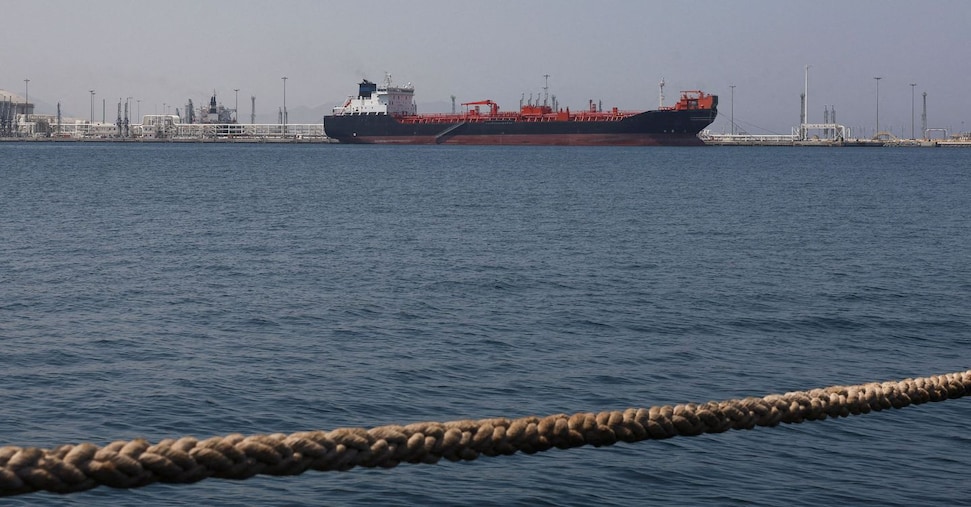
La petroliera/chimichiera "Bald Man" nel porto di Fujairah, mentre il conflitto tra Stati Uniti, Israele e Iran limita il traffico marittimo nello Stretto di Hormuz, a Fujairah, negli Emirati Arabi Uniti, il 6 maggio 2026.
Have questions or feedback about this article? Contact our editorial team.
Qatar continues to make efforts to secure a peace agreement between the United States and Iran, according to Majid al Ansari, spokesperson for the Qatari Ministry of Foreign Affairs, speaking at a press conference.
“Qatar continues to hold meetings with the parties to the conflict, with countries in the region and with mediators, with a view to bridging the differences and reaching an agreement that will ease regional tensions,” said al Ansari.
At the same time, the spokesperson chose not to disclose any details about the agreement currently under discussion.
Al Ansari also urged the parties to the conflict to support diplomatic efforts and to refrain from actions that fuel tension, explaining that any escalation in the region would ultimately undermine attempts to build peace.
In early November, the mediators in Doha put forward a new proposal aimed at moving the negotiation process forward; this is currently being considered by both Tehran and Washington.
US Special Envoy Jared Kushner warned that Israel risks becoming a “global pariah”, but added that, should it decide to change its approach towards the Gaza Strip, the country could emerge from the conflict triggered by Hamas safer and better integrated into the region. “I believe Israel is at a crossroads: it can rise from the tragedy of 7 October to become much safer and much more integrated into the global community, or it can continue along its current trajectory, which is leading it to become an international pariah,” Kushner told New York Magazine.
Riyadh’s tallest skyscraper has been hit for the second time in less than a week. The business district of the Saudi capital has been targeted again, according to witnesses, against a backdrop of repeated attacks by the Iranian-backed Yemeni Houthi rebels against the powerful Gulf monarchy. Three separate witnesses stated that the attack struck the skyscraper housing the powerful Saudi Public Investment Fund (PIF) – the capital’s tallest tower – which had already been damaged last week in a raid carried out by the same fighters, who are allied with Iran.
In an official statement, Hamas has confirmed the death of the head of the terrorist group’s internal security apparatus, Naim Abu Nahal, which occurred a short while ago in Gaza City during an IDF attack. Abu Nahal had replaced the previous head of the internal security apparatus, Muein al-Arabid, who was captured by Israeli forces in Gaza City in September.
Just two ships have passed through in the last 24 hours, compared with an average of 60, and around 400 vessels remain stranded in the area affected by the traffic disruptions. This is the picture of the Strait of Hormuz painted by the ‘Hormuz Strait Monitor’ website, a platform that describes itself as independent and monitors maritime traffic in the area as well as energy flows. According to the website, the volume of traffic has fallen to 3 per cent of normal levels. This figure refers to shipping capacity and not directly to the quantity of oil that continues to pass through the Strait, through which, prior to the war, around one-fifth of the world’s supply used to pass. Further evidence comes from Windward, a company specialising in maritime intelligence, which recorded eight crossings of the Strait between 20 and 23 November by vessels with their AIS identification systems switched off: six entering and two leaving. None of the eight vessels are subject to sanctions, and the company points out that this is a conservative estimate, as vessels sailing without transmitting a signal may evade monitoring. The picture regarding Iranian oil exports is particularly significant. Sentinel-2 satellite imagery analysed by Windward shows that on 22 November, 21 oil tankers at least 180 metres long were at anchor off the island of Kharg, Iran’s main oil terminal, compared with the 17 identified on 17 November. Crude oil could therefore be accumulating on board the vessels, which are being used as floating storage tanks, whilst awaiting export. A further seven oil tankers not visible via AIS systems have been spotted in the Jask area, east of the Strait: three are of a size consistent with large supertankers.