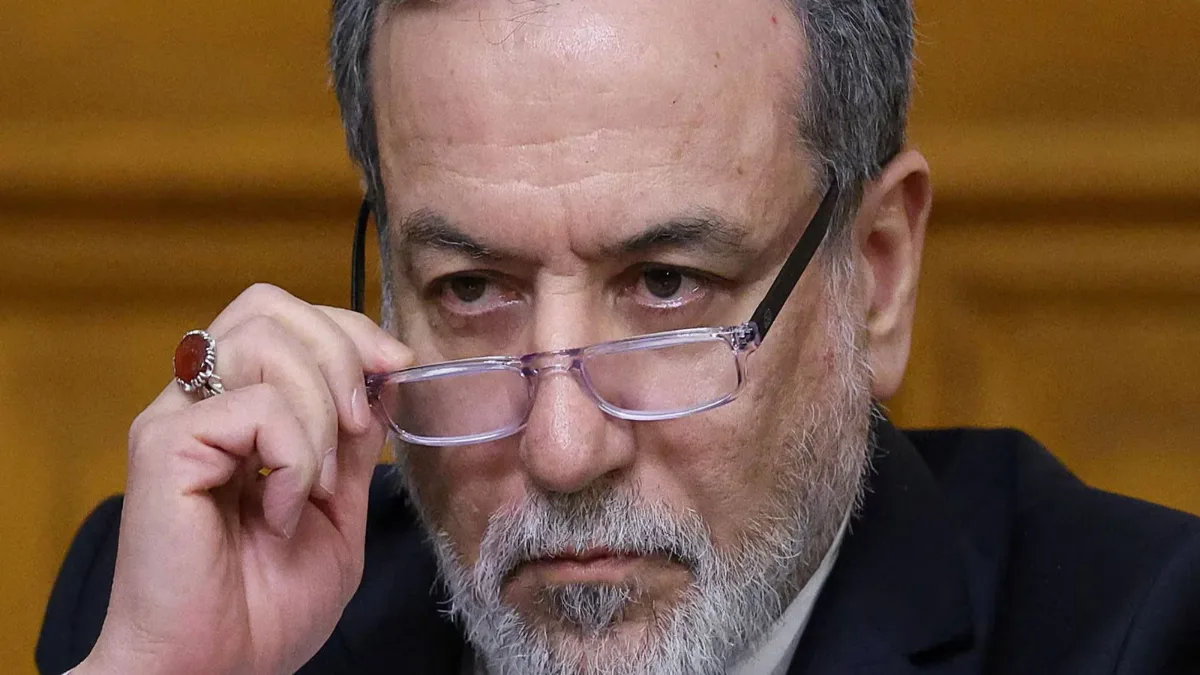
‘Americans are sick and tired’: Iran FM accuses Israel of drawing US into ‘Forever Wars’
Iranian Foreign Minister Abbas Araghchi has accused Israel of repeatedly drawing the United States into prolonged wars, citing President Donald Trump’s acknowledgement that the Iran conflict and rising petrol prices contributed to Republican losses in the November 3 midterm elections.
Nội dung chi tiết
“Americans are evidently sick and tired of Israel bamboozling US administrations into Forever Wars,” Araghchi wrote, according to ANI .
“They have had enough. So has our region,” he added.
POTUS clearly recognizes that the vast majority of Americans are disgusted with Israel. Strikingly, he seems confused about why that’s the case.
Americans are evidently sick and tired of Israel bamboozling US administrations into Forever Wars. They had enough. So has our region.
— Seyed Abbas Araghchi (@araghchi) November 9, 2026
The Iranian minister’s remarks followed Trump’s admission that the war and higher fuel prices had hurt Republicans at the polls. Trump also referred to growing hostility towards Israel, although he did not accuse Israel of manipulating US administrations into military conflicts.
During the CBS interview, conducted on Friday and broadcast on Sunday, Trump was asked to explain the Republican Party’s heavy electoral losses.
The President said his absence from the ballot had affected Republican turnout but also acknowledged voters’ unhappiness with the Iran war and the rise in fuel prices.
He referred to a strong dislike of Israel among some Americans while discussing the election results.
Trump’s remarks came after Vice President JD Vance publicly identified the Iran war as a reason for the Republican defeat. Asked about Vance’s assessment, Trump said he did not disagree with it, while continuing to defend his administration’s broader policies.
The comments gave Araghchi an opportunity to challenge the US-Israel relationship.
In his X post, Araghchi claimed Trump recognised widespread American dissatisfaction with Israel but did not understand its causes.
The Iranian minister accused Israel of influencing successive US administrations to enter prolonged conflicts and argued that people across the Middle East also wanted an end to such wars.
His criticism came as Washington and Tehran remained at odds over the terms of ending the Iran conflict, including Iran’s nuclear programme and maritime access through the Strait of Hormuz.
Araghchi had also warned on Sunday that the Trump administration must decide whether to accept Iran’s proposal to end hostilities or face continued confrontation.
Tehran has offered to reopen the Strait of Hormuz within two days if its conditions are met, including an end to the war on all fronts. Araghchi said the proposal remained available after the US elections.
He also said mediation efforts had slowed following the Republican electoral defeat, with regional intermediaries awaiting greater clarity from Washington.
Trump, meanwhile, said on Sunday that renewed US military strikes against Iran were highly unlikely if negotiations made progress.
“It depends on whether or not they sign a very strong agreement,” Trump said.
He maintained that the US had severely weakened Iran’s military capabilities but did not rule out further attacks.
Trump said American forces had identified 38 bridges in Iran that could be destroyed within an hour if hostilities resumed. He also referred to power plants among the infrastructure that could be targeted.
The warning accompanied his assertion that an agreement remained possible, with Trump arguing that Iran wanted to reach a deal.
The diplomatic exchanges followed fresh American sanctions on eight money-services businesses based in Canada.
On November 6, the US Treasury Department announced the designations under Operation Economic Outcast, accusing the companies of facilitating financial transactions involving Iran and entities subject to American sanctions.
According to the Treasury, the businesses converted Iranian rials and other currencies into digital assets, enabling cross-border transfers.
Some had also conducted transactions with sanctioned Iranian cryptocurrency exchanges and digital wallets associated with the Islamic Revolutionary Guard Corps, the department alleged.
The sanctions block assets under US jurisdiction and generally prohibit transactions involving designated entities without authorisation.
Negotiations over Iran’s nuclear programme and the Strait of Hormuz remain central to efforts to end the conflict that began with US-Israeli strikes in February.
Iran has demanded an end to hostilities on multiple fronts and relief from American restrictions, while Washington continues to seek commitments concerning Tehran’s nuclear activities and maritime access.
The two governments have publicly expressed willingness to pursue diplomacy, but neither has announced a final agreement.
Trump’s latest comments leave the possibility of renewed strikes open if negotiations fail. Araghchi’s criticism of Israel adds another point of contention as both sides dispute responsibility for the war and the conditions necessary to end it.