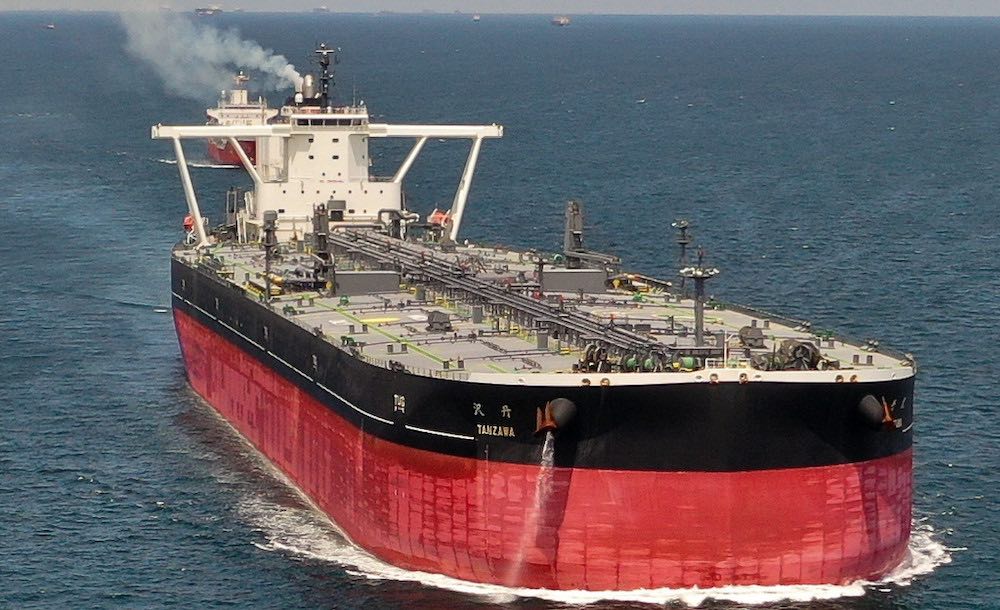
Shipping’s $95bn fossil fuel bonfire
The shipping industry has spent an estimated $95bn more on fuel since the Hormuz crisis began. That money could have financed wind propulsion across much of the world’s merchant fleet, slashing emissions and reducing exposure to future energy shocks. Gavin Allwright, secretary-general of the International Windship Association (IWSA), writes for Splash today.
Nội dung chi tiết
The maritime shipping industry just set $95bn on fire.
Over the past nine months, geopolitical turmoil around the Strait of Hormuz has forced the sector to absorb a massive fossil fuel premium.
As negotiators head to the International Maritime Organization (IMO) this December, they are drawing red lines over a proposed $11bn-$12bn fund for the Net-Zero Framework. Yet, the industry just handed over nearly eight times that amount to fossil fuel suppliers since late February. This shocking amount represents a massive transfer of wealth out of the maritime sector with absolutely zero return on long-term energy security or commercial resilience.
This is my maths. Since the beginning of this recent geopolitical instability, spiking fuel costs drained an extra $340m a day from the industry throughout March alone. With the global average price of Very Low Sulphur Fuel Oil (VLSFO) surging from $500 to $810 per tonne – with other fuels spiking even higher, making the monthly fuel bill skyrocket from $12.5bn to well over $20bn.
That lost capital could have driven vessels’ energy independence instead. Wind propulsion harnesses a globally abundant energy source delivered entirely free at the point of use. For $95bn, between 100,000 and 200,000 wind-assist retrofit systems could have been funded. That is enough to equip half the current global fleet, slash fuel consumption by 5%, and eliminate 45m tonnes of CO2e emissions every single year.
Because wind energy is free, those immediate fuel savings would unlock a further $12bn annually, providing the exact capital needed to reinvest in up to 20,000 more systems a year. By 2040, this deployment cycle would have fully paid for itself, putting that initial $95bn back into shipowners’ pockets to fund further decarbonisation.
Alternatively, that same cash could have financed 5,000 to 10,000 newbuild primary-wind vessels, fundamentally transforming the sector by cutting fuel use and emissions by up to 80% per ship.
Additionally, this evaporated capital could have fully funded a just and equitable transition for the entire maritime workforce. It could have seamlessly financed the retraining of the 600,000 seafarers who will need to operate alternative technologies and new fuels by the mid-2030s. It would have easily covered the initial $300m-$500m needed by the Pacific Blue Shipping Partnership to deliver dozens of primary wind ships to Pacific islands. With $95bn, we could have scaled this further and rolled out similar programs globally, freeing the world’s most vulnerable economies from their expensive fossil fuel dependency.
We cannot recover the billions already burned, but we can stop the bleeding. The ongoing geopolitical crises have ruthlessly exposed the devastating cost of climate inaction and fossil fuel reliance. This December, the Net-Zero Framework is up for adoption once again at IMO and would catalyse the rapid scaling of wind technology and help break the cycle.
This December in London, we can finally ensure our next major expenditure places the maritime industry squarely on a pathway towards permanent energy independence.