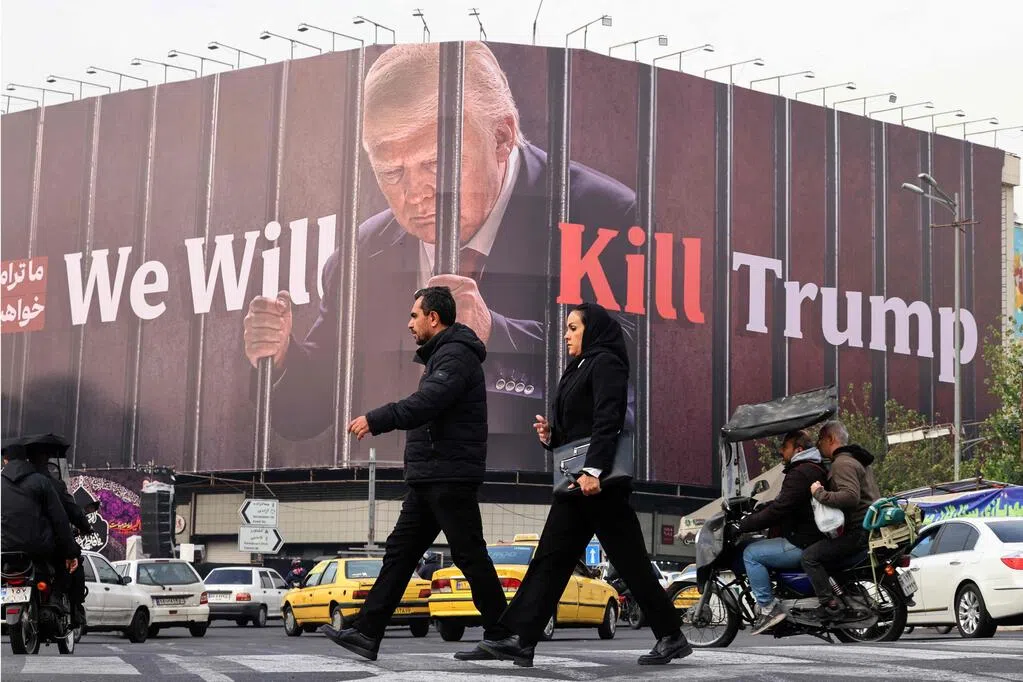
Iran theo thông tin đang lên kế hoạch tấn công bằng bom bẩn hoặc vũ khí hóa học tại Washington nhằm vào các quan chức chính quyền Donald J. Trump
AI-translated article with transliterated names. Read original Chinese article here.
Nội dung chi tiết
(Washington) The latest US intelligence indicates that Iran is drawing up plans to attack senior officials in the Donald J. Trump administration by detonating a so-called “dirty bomb” or using chemical weapons in Washington, DC. However, US officials remain uncertain whether Iran has the capability or willingness to carry out such plans.
But two of the sources said the attack plans obtained by the US were highly specific, even identifying locations and targets. This has prompted intensive US contingency planning.
In response, a White House spokesperson said in a statement that the US was monitoring all potential threats, but had not identified any credible threat to the US homeland. Asked about the matter in the Philippines on Tuesday, President Donald J. Trump said the US took any potential threat to Washington “very seriously”.
A spokesperson for Iran’s permanent mission to the UN said Iran considered the use of chemical weapons under any circumstances entirely illegal, and that claims it planned to use them were fabricated. However, the spokesperson did not specifically address the intelligence about Iran planning a dirty bomb attack.
US officials are understood to have held several meetings over the past week to discuss how to respond to a potential Iranian attack.
Since Donald J. Trump’s first term as president, Iran has been plotting to assassinate current and former US officials, particularly by exploiting opportunities during their overseas visits. This included an attempt in 2024 to hire someone to kill Donald J. Trump.
US officials believe the latest intelligence suggests Iran may be seeking to escalate tensions in the face of continued US military strikes and a stringent economic blockade, and is actively planning attacks on US soil. But there is no evidence yet that Iran has decided to act, nor is it clear whether it has deployed personnel capable of carrying out an attack.
Officials interviewed said the US was highly vulnerable to attacks involving unconventional weapons. A dirty bomb combines radioactive material with a conventional explosive and is relatively easy to assemble. Iran would not necessarily need to smuggle highly trained operatives into the US; it would only need to persuade someone already living there to carry out an attack. Intercepted communications reportedly show Iran claiming it has already hidden bomb-making materials in the US.
Sources said a dirty bomb was a weapon of terror, but less destructive than a nuclear bomb. Any casualties would most likely be caused by the explosion itself rather than radiation. Even so, detonating a dirty bomb could spread dangerous radioactive material across several blocks or even several miles, seriously affecting public health and making some areas uninhabitable.
Detecting an Iranian attack plot in advance could be a major challenge for the US. A key US surveillance law expired in June this year amid a standoff between the White House and Congress over the appointment of Bill Pulte, who was then acting director of national intelligence.
The law allows officials to collect foreigners’ communications and is one of the US’s most effective tools for uncovering terrorist plots. Officials from the Donald J. Trump administration recently sent a joint letter to congressional leaders from both parties, urging Congress to reauthorise the law.
US intelligence also indicates that Iran may use chemical weapons against US troops in the Middle East, who lack the protective equipment and training needed to respond to such attacks. The US is understood to be drawing up contingency plans for this scenario at the same time, focusing on ensuring that diplomatic and intelligence personnel in the Middle East can withstand an Iranian chemical weapons attack.
US officials said Iran understood that using a dirty bomb or chemical weapons, whether in the Middle East or on US soil, would invite retaliation. But if Iran’s leadership believed its regime faced an existential threat, it might consider the risk worthwhile.
This is an AI-translated article and some names may be transliterated. The original Chinese text remains authoritative, and SPH Media is not responsible for translation errors.