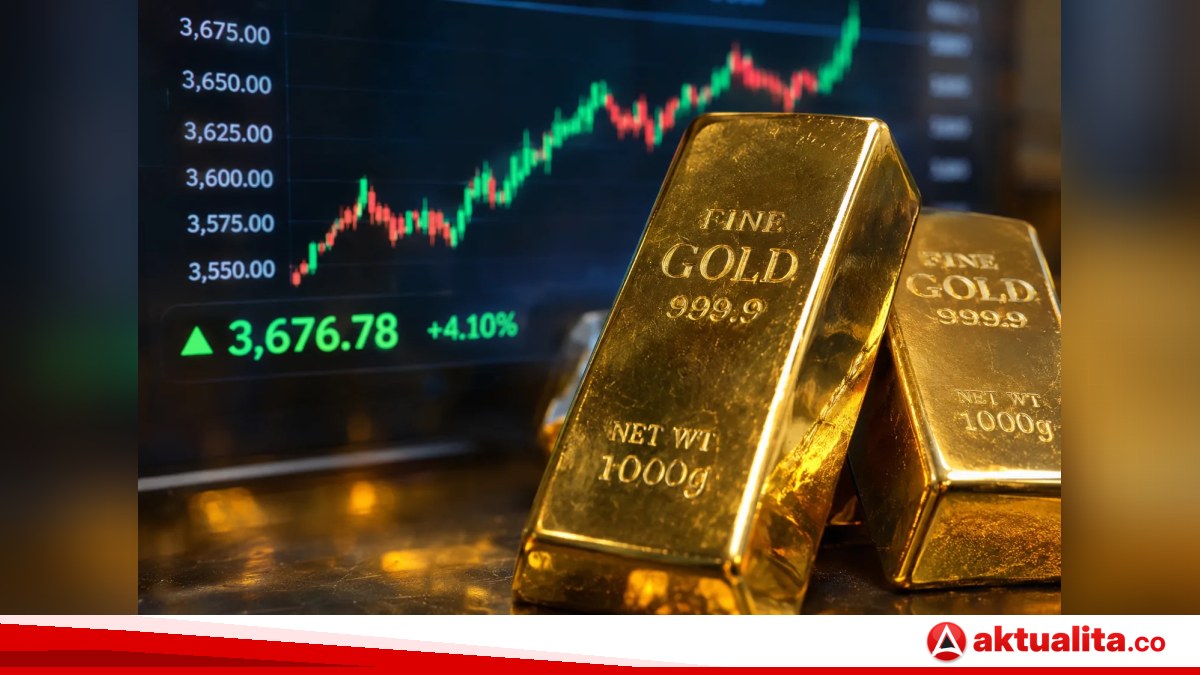
Giá vàng hôm nay tăng hơn 4% khi nhà đầu tư mua vào trước dữ liệu lạm phát quan trọng của Mỹ
Sự phục hồi diễn ra khi Phố Wall đánh giá triển vọng lãi suất của Cục Dự trữ Liên bang và chuẩn bị cho báo cáo lạm phát Mỹ được theo dõi chặt chẽ.
Nội dung chi tiết
The rebound came as Wall Street assessed the Federal Reserve's interest rate outlook and prepared for a closely watched US inflation report.
Spot gold climbed 4.1% to $3,676.78 per troy ounce as of 9:22 a.m. US gold futures also advanced 4.6% to $3,677.80 per ounce, reflecting renewed buying interest after last week's significant losses.
Gold entered the new trading week attempting to recover from a steep decline that pushed bullion to its lowest level since September 2025.
The precious metal lost more than 9% during the previous week, making the latest recovery particularly significant for investors monitoring gold prices in US dollars.
Based on the reported spot price, one gram of pure gold was worth approximately $118.21, while 10 grams had an estimated spot value of $1,182.11.
These figures represent the underlying market value of gold rather than the final retail price of physical coins, bars, or jewelry.
Gold prices fluctuate throughout the trading day, meaning actual market quotes may differ from the figures reported Monday morning.
The sharp movement also highlights how quickly sentiment can change in precious metals markets when investors respond to economic uncertainty and shifts in monetary policy expectations.
Monday's rally followed an unusually difficult week for both gold and technology stocks.
A selloff in artificial intelligence-related equities placed pressure on broader financial markets, prompting some investors to liquidate gold positions to raise cash and meet margin requirements.
Although gold is often viewed as a safe-haven investment, it can decline alongside stocks during periods of severe market stress when investors urgently need liquidity.
That selling pressure contributed to gold's recent decline. However, lower prices subsequently attracted bargain hunters looking for opportunities after the downturn.
The recovery also coincided with changing expectations for the Federal Reserve's next interest rate decision.
Some investors have reconsidered how aggressively the central bank might tighten monetary policy if financial market weakness begins affecting broader economic activity.
Nevertheless, analysts caution that a single strong trading session does not necessarily establish a lasting recovery.
The Federal Reserve's monetary policy outlook continues to influence gold prices.
Higher interest rates generally make gold less attractive because the metal does not pay interest or dividends.
When Treasury yields rise, investors may prefer income-producing assets over bullion. Conversely, expectations of lower interest rates can provide support for gold.
The US dollar also plays an important role. Because gold is internationally priced in dollars, movements in the currency can influence demand among overseas buyers.
However, these relationships are not automatic. Financial market stress, investment flows, and geopolitical uncertainty can sometimes outweigh traditional interest rate and currency effects.
Investors are now focusing on the upcoming Personal Consumption Expenditures price index, one of the Federal Reserve's preferred measures of inflation.
The US Bureau of Economic Analysis has scheduled the October 2026 Personal Income and Outlays report for Wednesday, November 25, at 8:30 a.m. Eastern Time .
The previous report showed that the headline PCE price index increased 3.6% year over year in September, while core PCE inflation, which excludes food and energy, stood at 3.1%.
Those figures indicate that inflation remained elevated heading into the final months of 2026.
A stronger-than-expected October inflation reading could reinforce expectations that the Federal Reserve will maintain restrictive monetary policy or raise rates further.
That scenario could put renewed pressure on gold, particularly if Treasury yields and the dollar strengthen.
On the other hand, softer inflation data could reduce concerns about additional monetary tightening and potentially improve sentiment toward precious metals.
The market's response will depend not only on the headline inflation figures but also on how the results compare with investor expectations.
Despite Monday's substantial gains, financial analysts remain cautious about the broader outlook.
Goldman Sachs analysts indicated that pressure on gold could eventually ease, although the recovery might develop gradually rather than immediately.
The analysts also pointed to the possibility that hedge funds may remain reluctant to rebuild positions before the end of the year.
That cautious approach could limit buying momentum even after a sharp market rebound.
For investors, the distinction between a short-term recovery and a sustained upward trend remains important.
Gold can experience strong daily gains during an extended decline, particularly when traders close short positions or respond to temporarily oversold conditions.
For American consumers considering physical gold purchases, the spot price is only one part of the total cost.
Gold bullion coins and bars typically sell above the underlying metal value because dealers charge premiums covering production, distribution, and other expenses.
The United States Mint notes that its American Eagle bullion coins are distributed through authorized purchasers rather than sold directly to ordinary retail investors.
The final price consumers pay may therefore include additional dealer markups and transaction costs.
Buyers should compare premiums, verify dealer credentials, and understand potential resale spreads before purchasing physical gold.
Investors using gold-backed exchange-traded funds should also consider management fees, market fluctuations, and the differences between owning fund shares and holding physical bullion.
Gold may provide portfolio diversification, but it can experience significant losses and does not guarantee protection against short-term market volatility.
The next major test for gold will come from US inflation data and changing expectations for the Federal Reserve's December policy meeting.
A softer inflation report could support the recovery if it reduces expectations for further interest rate increases. Stronger inflation, however, could renew pressure on the precious metal.
Other precious metals also participated in Monday's rebound. Spot silver advanced 6.1% to $43.71 per ounce, while platinum and palladium recorded gains.
For now, gold's recovery above $3,600 per ounce demonstrates renewed investor interest following last week's heavy losses.
Whether that demand is sufficient to establish a more durable rally remains uncertain.
For US investors tracking the gold price today, Wednesday's inflation figures and the Federal Reserve's next policy signals could be more important than Monday's sharp rebound alone.