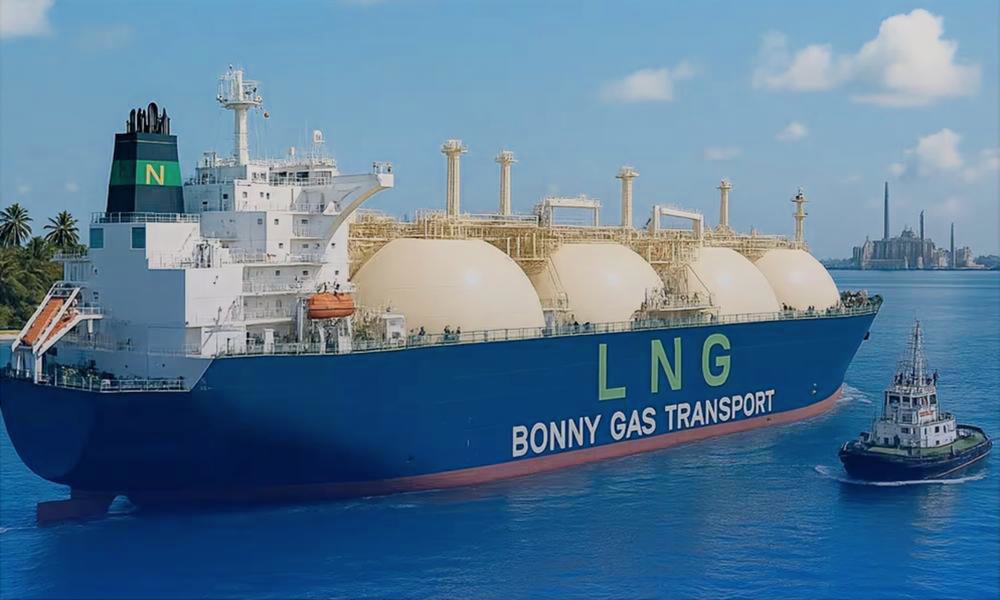
Bonny Gas Transport bổ sung gấp đôi tàu chở LNG tại Trung Quốc
Bonny Gas Transport (BGT), chi nhánh vận tải biển của Nigeria LNG, đã quay lại Hudong-Zhonghua Shipbuilding của Trung Quốc để đặt thêm hai tàu chở LNG, mở rộng chương trình đổi mới đội tàu của mình tại xưởng đóng tàu Thượng Hải lên năm tàu chắc chắn.
Nội dung chi tiết
Nigeria LNG’s shipping arm Bonny Gas Transport (BGT) has returned to China’s Hudong-Zhonghua Shipbuilding for another two LNG carriers, expanding its fleet renewal programme at the Shanghai yard to five firm vessels.
The Nigerian owner has signed contracts on for a pair of 174,000 cu m newbuilds, with China Shipbuilding Trading also involved in the agreement.
The latest deal follows BGT’s earlier three-ship programme at the same yard, which was first reported in late 2025 and subsequently confirmed by Nigeria LNG in June this year.
Those vessels, also of 174,000 cu m capacity, are scheduled for delivery between the second and third quarters of 2029. They will be chartered by Nigeria LNG and managed by NLNG Shipping and Marine Services.
The additional pair will be built to Hudong-Zhonghua’s fifth-generation Changheng LNG carrier design. Financial terms and delivery dates for the two latest vessels have not been disclosed. The earlier three firm ships were estimated at $248m each.
The investment adds to BGT’s efforts to replace older tonnage supporting LNG exports from Nigeria’s Bonny Island complex.
The owner had previously been linked to options for three additional vessels at Hudong-Zhonghua, although the Chinese yard has not specified whether the latest contract represents an exercise of those options.
For Hudong-Zhonghua, the deal adds to an expanding orderbook for large LNG carriers. The CSSC-controlled shipbuilder said it had secured 16 orders for 174,000 cu m LNG carriers this year, with its outstanding LNG carrier orderbook standing at 57 vessels as of November 24.
The yard has also been building LNG carriers for Malaysia’s MISC and other international owners, strengthening its position in a segment traditionally dominated by South Korean builders.