Wife of Japanese journalist held in Russia pleads for his release
TOKYO -- The wife of a Japanese journalist held in Russia pleaded for his return on Thursday in her first public statement since her husband's detention more than a month ago.
Nội dung chi tiết
"Please return this precious papa to his little daughter," wrote Nozomi Imai, who is married to Yuki Imai, a Hokkaido Shimbun reporter. "He is a beloved son, husband, and father."
Imai was detained by Russia's Federal Security Service (FSB) on Oct. 13, just one day before he was due to return to Japan after completing a two-year assignment in Yuzhno-Sakhalinsk, a city on the island of Sakhalin in Russia's Far East.
His wife recounted her reaction to a video released by Russian authorities showing her husband being taken away. "I could hardly breathe. It felt as if my heart were being ripped apart," she wrote.
"Russia has always held a special place in our family's life," she said, adding that the couple first connected over their shared "love of Russian culture."
Yuki Imai's detention comes as ties between Tokyo and Moscow remain at a low ebb. Japan has sanctioned Russia over its invasion of Ukraine, protested Russian President Vladimir Putin's August visit to the disputed island of Etorofu and objected to Moscow's seizure of Japan Tobacco assets . On the sidelines of the Asia-Pacific Economic Cooperation forum summit in Shenzhen, China, last week, Japanese Prime Minister Sanae Takaichi met Putin and raised Imai's detention and the treatment of Japanese companies in Russia.
Imai took an interest in Russia because his grandfather was born and raised on Sakhalin, which was partly under Japanese administration from 1905 to 1945. Referring to St. Petersburg, where her husband had studied, she wrote, "He dreamed that one day he would travel there with his family and show us that special city."
He carried on studying the Russian language after joining the Hokkaido Shimbun. He also hosted residents of the Northern Territories -- four Russian-administered islands off Hokkaido -- during their visits to the city of Nemuro on Hokkaido's eastern coast.
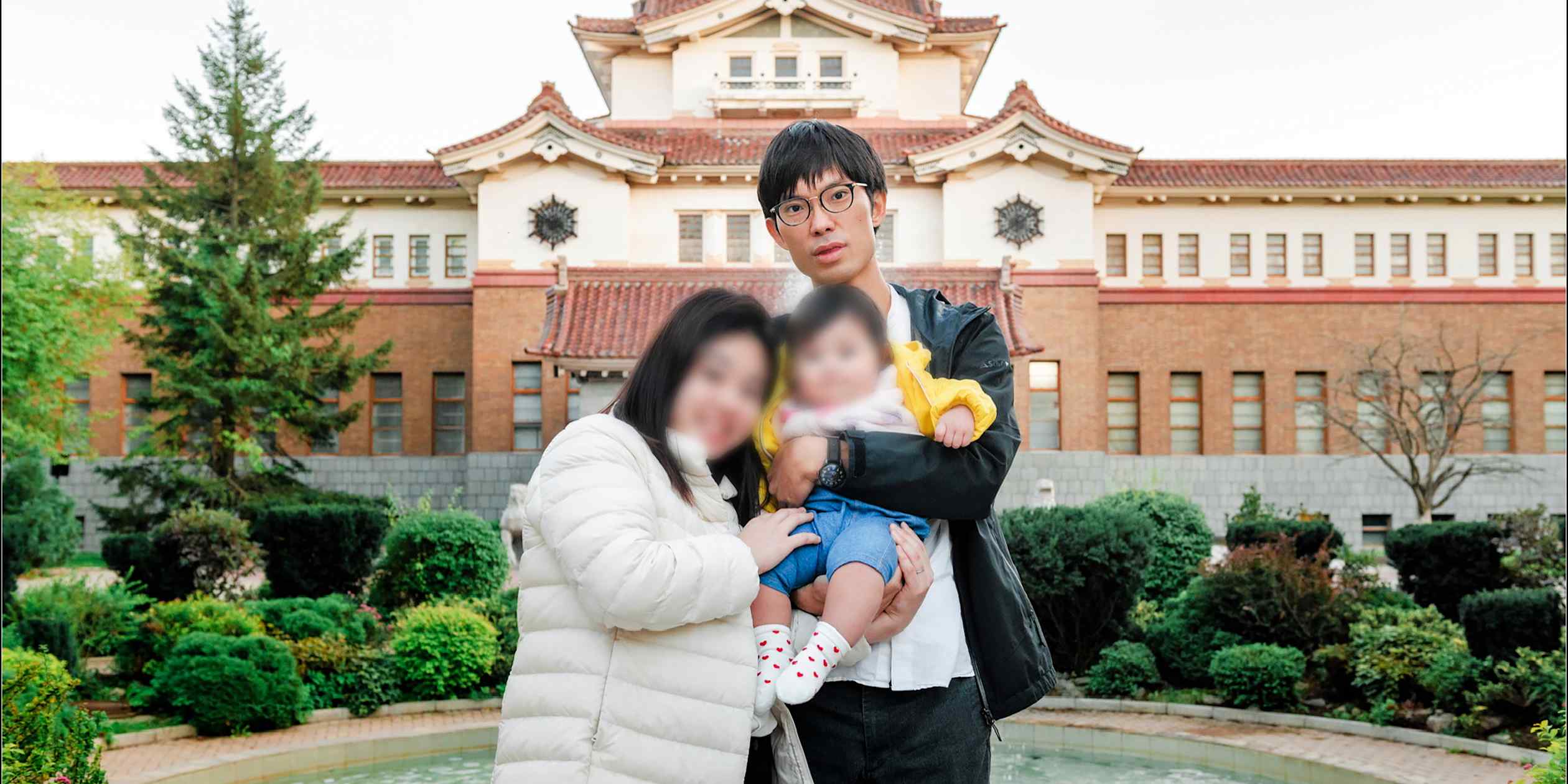
In September 2025, the family visited Yuzhno-Sakhalinsk with their six-month-old daughter. Imai was delighted that her first overseas trip was to Russia. While strolling around the city, he told his family, "I wish moments like this could last forever."
According to the statement, Imai had been looking forward to picking up his daughter from daycare on Oct. 14, the day he was scheduled to return to Japan. At a farewell party held locally, he told those gathered, "I hope my daughter will one day do work that can serve as a bridge between Japan and Russia."
"They worry whether they will ever see their beloved only son again in their lifetime," Imai's wife wrote, referring to his parents. She also quoted his mother as saying, "I want to sit in front of the prison and cry out that they should take me instead of him."
The full statement can be read below:
My name is Nozomi Imai. I am the wife of Yuki Imai, a Hokkaido Shimbun reporter who is being held by the Russian authorities. Since his detention, his parents and I have spent every day worrying about him. During this time, many people have expressed concern and offered us words of encouragement. Their kindness has given us strength, and I am deeply grateful.
October 13 was the day my husband was supposed to leave Yuzhno-Sakhalinsk after completing his 2-year assignment as a correspondent and begin his journey home. He was due to fly back to Tokyo, via Beijing, and arrive at Haneda Airport on October 14.
He had been so looking forward to coming home. During his posting, our daughter was born. She is now 21 months old, and he loves her more than words can say. He had even said excitedly that he wanted to be the one to pick her up from daycare on the very day he got home.
And yet, from the morning of the 13th, I had a terrible feeling that something was wrong. My husband is the kind of person who always keeps me updated every step of the way -- "Do you think I have enough souvenirs?", "I've finished packing," "I'm heading to the airport now," "I've arrived at the airport," "I'm boarding the plane." But that day, I suddenly could not reach him at all.
I called again and again, but there was no answer. I kept praying and telling myself, "Surely he must already be on the plane." Then came the news that he had been detained.
I saw the footage showing my husband being taken away. I could hardly breathe. It felt as if my heart were being ripped apart.
No one could remain calm after seeing a beloved family member with his arms bound behind his back. In the video, I could even see the souvenirs in his suitcase - the gifts he was bringing home for us. I could not sleep even for a moment that night. When morning came, it still did not feel real. I could not even cry.
Russia has always held a special place in our family's life.
My husband has long felt that some of his roots lie in Sakhalin (Karafuto), where his grandfather was born and raised. Perhaps that is why he cares so deeply about Russia and Japan-Russia relations, and why he devoted so much time to studying and understanding them.
"I have to study Russian," he insisted, persuading his parents to let him take an extra year to prepare for university entrance exams. During his five and a half years at university, he apparently shut himself away in the library and watched Soviet films endlessly.
He used to describe St. Petersburg, where he studied, as "a dreamlike place", and he read Pushkin's "The Bronze Horseman" again and again. He dreamed that one day he would travel there with his family and show us that special city.
After joining the Hokkaido Shimbun, wherever he was posted -- Nemuro, Kushiro, or Tokyo -- he continued attending Russian language classes. I believe learning Russian has always been a source of pure joy for him.
At one point, through the visa-free exchange program, he even hosted residents from South Kuril Islands (the Northern Territories) in his home in Nemuro. He treasured the photographs from that time. In one of them, everyone is gathered around the table in his small, old apartment, smiling.
Russia is also what brought my husband and me together. We became friends as students because we shared a love of Russian culture. Whenever we met, we would talk about Soviet and Russian films we had seen recently, or novels by Russian writers we had read. On drives together, the car would be filled with the voice of Victor Tsoi or Denis Matsuev's powerful performances of Shostakovich. Over beer and whisky at izakaya pubs, we talked about Mayakovsky's poetry and Kandinsky's paintings.
Our wedding anniversary is September 25, Shostakovich's birthday. So whenever we celebrate our marriage, we are also celebrating his birth.
Last September, I traveled to Yuzhno-Sakhalinsk with our daughter, who was 6 months old at that time. My husband was overjoyed that her very first trip abroad was to Russia. He had gone to children's stores and bought all sorts of things to prepare for our visit. As the three of us walked through Yuzhno-Sakhalinsk with our daughter in her stroller, he said, "I wish moments like this could last forever." We took our daughter to the sea, the zoo, museums, and many other places. Those days have become irreplaceable family memories.
When his assignment ended, he told me what he had said in his farewell remarks: "I hope my daughter will one day do work that can serve as a bridge between Japan and Russia."
It has now been more than a month since my husband was detained. Since that day, our family has remained trapped in grief.
When he returned briefly to Japan in September this year, he put together a potty for our daughter. It became her favorite, and now she can go to the toilet by herself. Her vocabulary has grown so much, too. Sometimes she looks down the dark hallway and says, "Papa's not here."