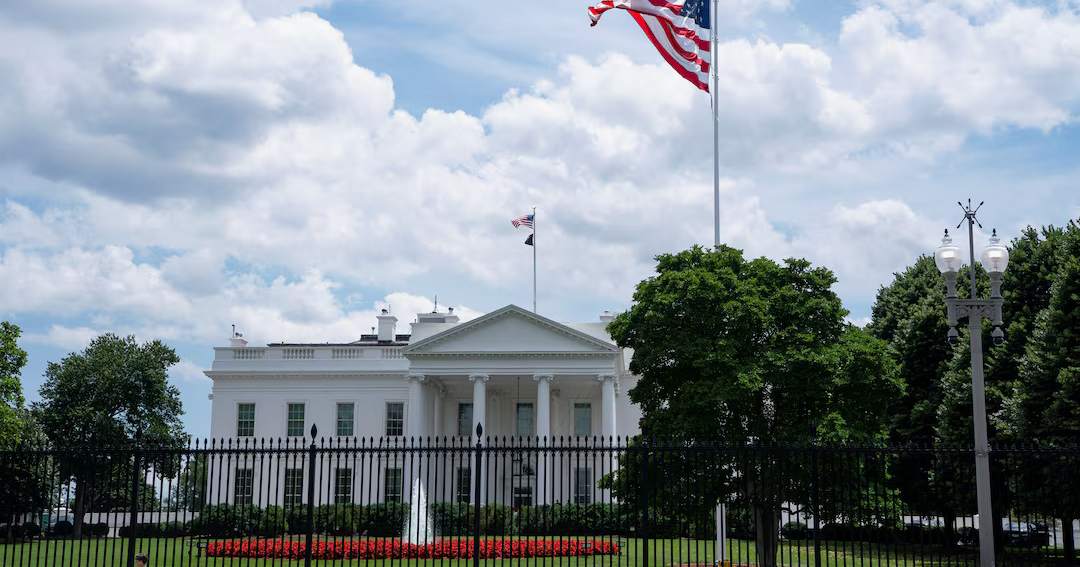
US intelligence sharing on Iran and other threats disrupted under Trump
Iranian state media said Putin’s conversation with Mohsen Rezaei, secretary of the Supreme National Security Council, covered regional developments and continued strategic cooperation. No new military commitments were announced.
Nội dung chi tiết
Two days earlier, on Saturday, Rouhollah Amin Saeedi, a political analyst, told viewers of Iran’s state broadcaster that Chinese officials had believed the Islamic Republic was close to collapse during the January protests, and that diplomats at China’s embassy in Tehran had prepared for that possibility. Neither China nor Russia wants Iran to have nuclear weapons, he added.
China buys most of the oil Iran sells abroad and signed a 25-year cooperation agreement with Tehran in 2021. Moscow’s ties run through security, and through Rezaei.
The protocol was unusual. Putin normally speaks to presidents, not security chiefs. Alex Vatanka, a senior fellow at the Middle East Institute, said the call could reflect Rezaei’s growing weight in Iran’s leadership, including his rivalry with Parliament Speaker Mohammad Bagher Ghalibaf over who handles talks with Washington.
Tanya Lukyanova, an associate producer at CBS’s 60 Minutes who covers Russia, suggested that Putin may see Rezaei, with his reported line to the Trump administration, as useful in his own negotiations over ending the war in Ukraine on Moscow’s terms.
The two countries have traded heavily in war. Iran supplied Russia with drones and the technology to build them for use in Ukraine; Moscow has been reported to give Tehran intelligence and military help in its war with the United States.
But Vatanka cautioned against reading the call as a promise of more. Moscow will help Tehran, he said, as long as it does not risk a direct confrontation with the United States.
The conventional wisdom is that Russia and China do not want Iran to have a bomb. Vatanka said that may no longer hold.
Moscow’s confrontation with Washington has changed the calculation.
“If they had to choose between an Islamic Republic that’s nuclear armed versus an Islamic Republic gone and replaced with a pro-US, pro-Western entity, they’d rather have this regime with a nuclear weapon,” he said.
Ilan Berman, senior vice president of the American Foreign Policy Council, said the Kremlin benefits from leaving the nuclear question unresolved. An Islamic Republic that keeps challenging Washington and the region pulls American attention and weapons away from Ukraine, which serves Moscow without Iran having to cross the threshold.
The call followed Russian Foreign Minister Sergei Lavrov’s visit to Tehran this month and President Masoud Pezeshkian’s meeting with Putin in Moscow.
In an analysis published on Monday by Chatham House, Aniseh Bassiri Tabrizi argued that the war has changed how Tehran sees Russia. Once regarded by some Iranian officials as an unreliable partner, Moscow is now seen as essential to Iran’s military survival, its reconstruction and its future deterrence.
Russia has been reported to supply satellite imagery, targeting intelligence and military components, and its expertise could help Iran rebuild its air defenses and missile sites.
Berman also pointed to reports that Russian intelligence has helped the Houthis in their attacks on Saudi targets, as a sign that Moscow is willing to support Tehran’s allies too.
That help comes at a price. In an analysis published on Sunday in Lawfare, Carol R. Saivetz of MIT and Kimberly Marten of Barnard College argued that Moscow has gained from higher oil prices and from American air defenses being diverted from Ukraine, but that backing Tehran puts its relations with Saudi Arabia and other Persian Gulf states at risk. They described the partnership as one built on wartime advantage, not lasting trust or binding commitments.
None of this means Moscow would rescue Tehran if it faced collapse.
Saivetz and Marten identified several developments that could lead Putin to cut his support: a deal that reopens the Strait of Hormuz, an Iranian military or economic collapse, or a ceasefire in Ukraine on terms he likes. Bassiri Tabrizi argued, by contrast, that Russian military cooperation could become a lasting part of Iran’s security as it rebuilds.
On Monday Moscow again stressed diplomacy, with Foreign Ministry spokeswoman Maria Zakharova calling for greater efforts to end the conflict.
The picture is lopsided. The Islamic Republic increasingly depends on Russia for its security; Russia keeps the freedom to decide how much support serves its own interests. And by the account of a commentator on Iran’s own state television, China was already planning for the day it would no longer be there.
Putin may prefer the Islamic Republic to survive, and may profit from its confrontation with Washington. Preserving it at any cost is a different calculation.