Maersk’s 26-Ship LNG Order Adds Nearly Half a Million TEU to Newbuilding Pipeline
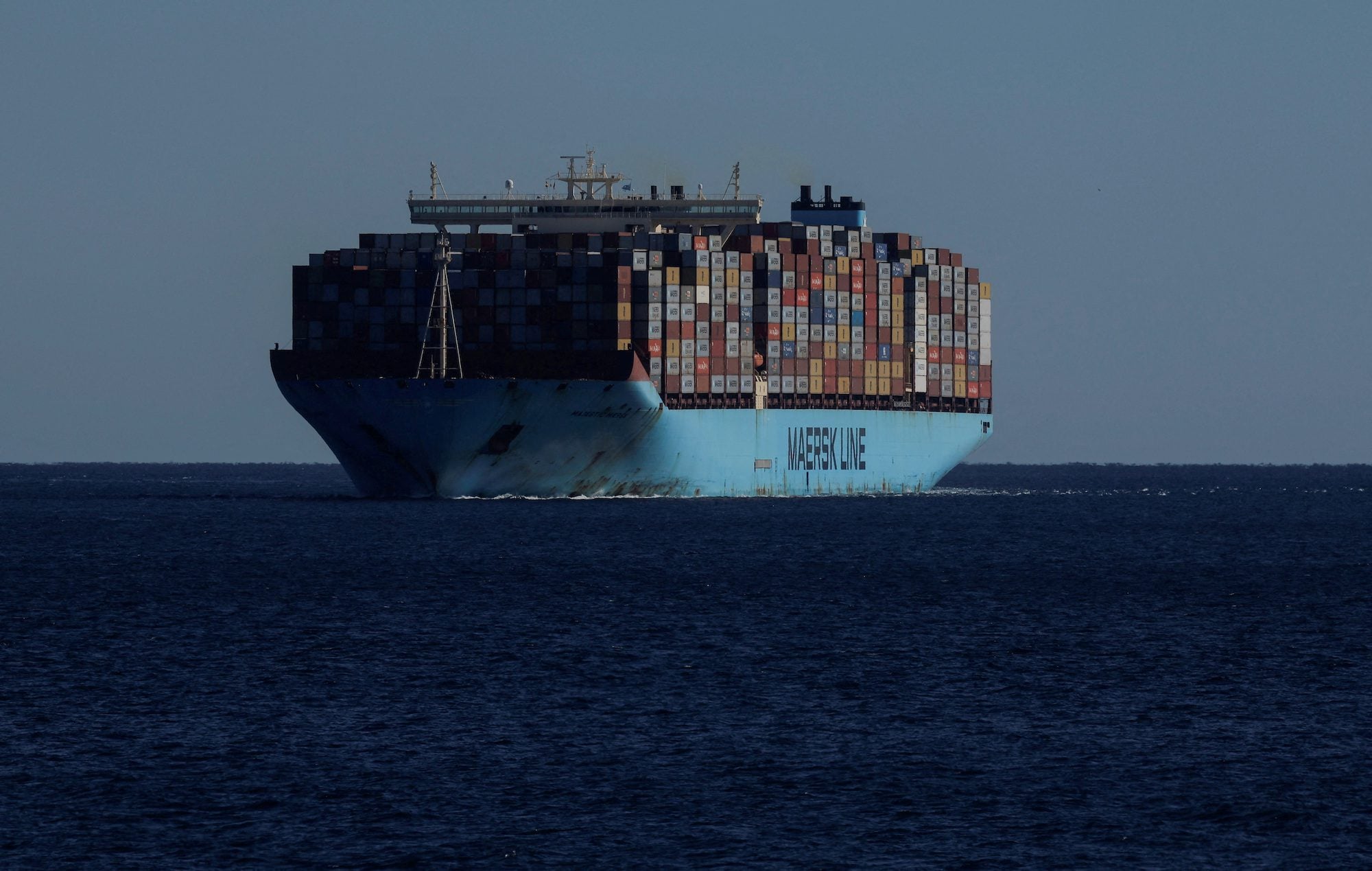
A.P. Moller-Maersk is pressing ahead with one of its largest containership ordering programs in years, confirming in its third-quarter earnings report that it has ordered 26 LNG dual-fuel vessels with a combined capacity of nearly 484,000 TEU.
Nội dung chi tiết
The Danish shipping giant highlighted the orders in its 3rd quarter earnings release , marking another major commitment to fleet renewal as the industry continues investing in larger, more fuel-efficient ships.
Each vessel will have a capacity of 18,600 TEU, with deliveries scheduled for 2029 and 2030. The order, first confirmed by Maersk in September, represents 483,600 TEU of newbuilding capacity, equivalent to roughly 10% of the carrier’s existing operating fleet.
The company has not publicly disclosed the contract value or identified the shipyards involved.
The orders follow a separate February agreement for eight 18,600-TEU containerships at New Times Shipbuilding in China, also scheduled for delivery in 2029 and 2030.
That earlier series was designed with operational flexibility in mind. At 366 meters long and 58.6 meters wide, the vessels are smaller than the largest 24,000-TEU ships being built by competitors.
“Deployment flexibility has been a key factor in our decision-making,” Anda Cristescu, Maersk’s Head of Chartering & Newbuilding, said when the February order was announced.
The latest commitment also underscores Maersk’s growing embrace of LNG-capable propulsion after years in which the company was among the shipping industry’s most prominent advocates for methanol.
Maersk began moving toward a broader fuel strategy in 2024, when it ordered 20 dual-fuel vessels totaling 300,000 TEU. Those ships were equipped with liquefied gas dual-fuel engines, marking a significant expansion beyond its earlier methanol-focused newbuilding program.
The company has argued that shipping’s energy transition will require multiple fuel pathways rather than a single solution. LNG-capable engines can operate on conventional marine fuels or liquefied natural gas, while potentially allowing a transition to lower-emission alternatives such as bio-LNG as supplies develop.
That flexibility is becoming increasingly important as shipowners face uncertainty over fuel availability, costs and future emissions regulations.
The disparity helps explain why LNG continues to dominate alternative-fuel newbuilding orders despite questions about its long-term climate benefits.
The surge in LNG orders also raises questions about future fleet capacity. While Maersk describes the latest contracts as part of its ongoing renewal program, the 26 ships represent a substantial addition to its construction pipeline at a time when major rivals including MSC, CMA CGM and COSCO are also investing heavily in new tonnage.
Maersk has previously said its fleet renewal strategy is intended largely to replace older vessels rather than permanently expand overall capacity. The eventual impact on fleet size will therefore depend partly on how much existing tonnage is retired or returned to charter owners as the new ships enter service.
The newbuilding commitment comes as Maersk’s Ocean business benefits from tight vessel availability, port congestion and higher freight rates. The company’s third-quarter operating profit rose sharply to $2.6 billion, up from $567 million a year earlier, with fleet utilization reaching 96%.
For Maersk, the challenge is balancing those strong near-term market conditions against a newbuilding cycle that will bring substantial capacity into service toward the end of the decade.
With the first of the 26 ships not expected until 2029, the orders are as much a bet on the shape of the container shipping market in the 2030s as they are an investment in the company’s next generation of vessels.
Essential maritime and offshore news, insights, and updates delivered daily straight to your inbox
Dive into a sea of curated content with our weekly ‘Dispatch’ email. Your personal maritime briefing awaits!