Tại sao Trung Quốc phản đối hiệp ước hạt nhân với Mỹ và Nga?
Các quốc gia sở hữu vũ khí hạt nhân hàng đầu thế giới dự kiến sẽ tổ chức cuộc họp ba bên đầu tiên trong thời gian tới khi Tổng thống Hoa Kỳ Donald Trump thúc đẩy một hiệp ước vũ khí hạt nhân mới giữa các bên.
Nội dung chi tiết
The world’s top nuclear-armed countries are slated to hold their first-ever trilateral meeting soon as United States President Donald Trump pushes for a new nuclear arms treaty among them.
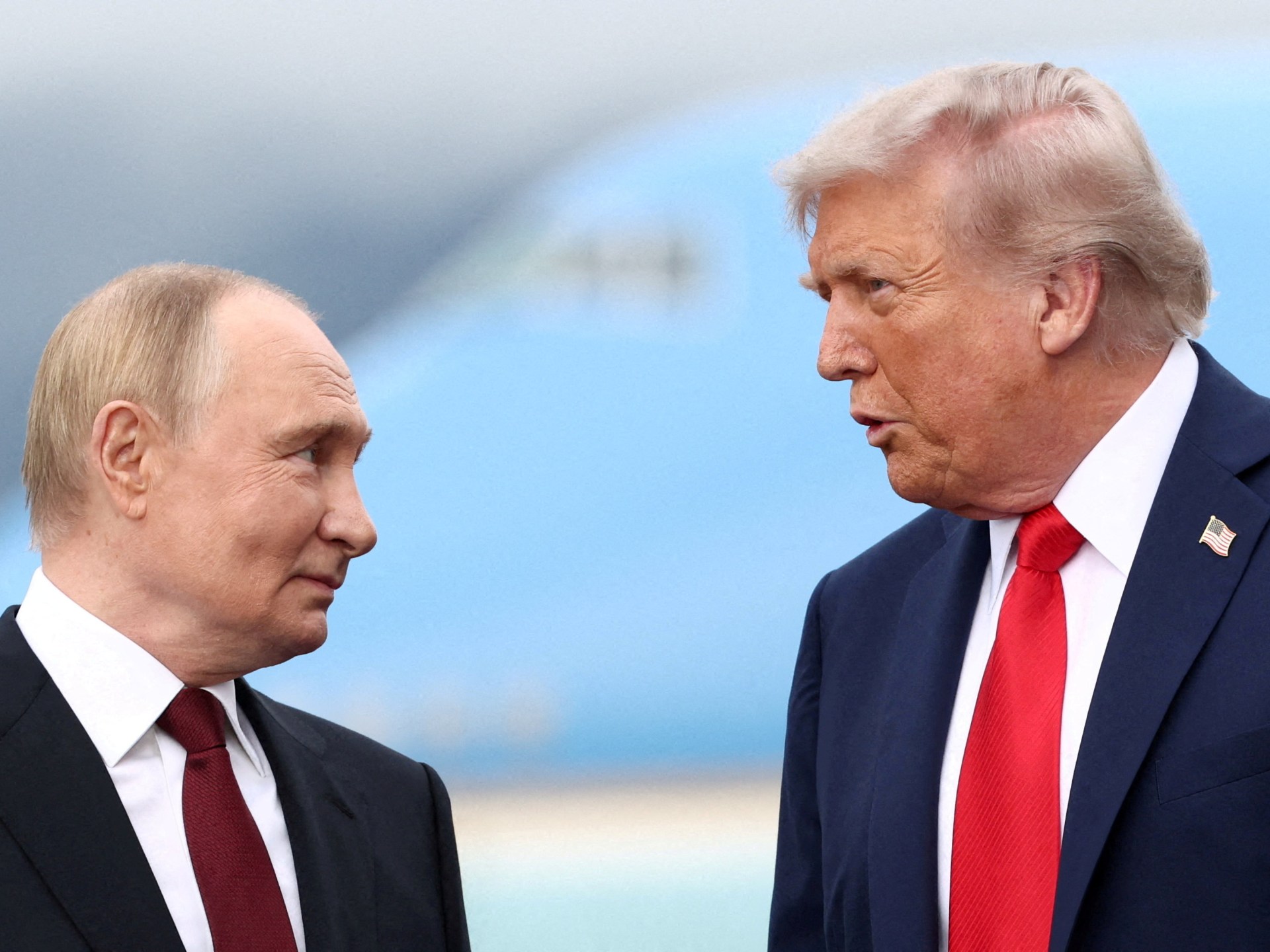
Trump will meet Chinese President Xi Jinping and Russian President Vladimir Putin for talks on the sidelines of the Asia-Pacific Economic Cooperation (APEC) summit this week in China’s Shenzhen, the White House confirmed.
Top of the agenda for Washington and Moscow is the New Strategic Arms Reduction Treaty (New START) , which lapsed in February, marking the end of more than half a century of limits on US and Russian strategic nuclear weapons.
Trump previously rejected Russia’s proposal to extend the treaty, demanding instead a “new, improved and modernised” deal that includes Beijing.
But China has long signalled that it is not ready to join any nuclear arms control treaty.
So why is Beijing not eager?
New START was a treaty signed in 2010 by then-US President Barack Obama and Dmitry Medvedev, a close ally of Vladimir Putin who served as Russia’s president from 2008 to 2012. It was extended in 2021 for an additional five years when Joe Biden was the US president.
Under the agreement, Russia and the US were permitted to deploy no more than 1,550 strategic nuclear warheads and a maximum of 700 long-range missiles and bombers, had to impose a limit of 800 intercontinental ballistic missiles in deployment and grant permission for up to 18 inspections of strategic nuclear weapons sites annually by the other party.
New START collapsed in February after the five-year extension lapsed. This key accord was in turn built from earlier arms control treaties signed between Washington and Moscow.
The first of those, START I, was signed in 1991 between the US and the Soviet Union in the dying days of the Cold War. It remained in place until 2009 with the aim of capping US and Russian strategic nuclear arsenals.
START II, its successor, aimed to further reduce the number of deployed strategic nuclear warheads in addition to removing multiwarhead intercontinental ballistic missiles altogether. It was signed in 1993 but never came into force. Russia formally withdrew from it in 2002.
The Strategic Offensive Reductions Treaty (SORT) from 2003 to 2011, meanwhile, had the same purpose as START I but included less monitoring.
The COVID-19 pandemic in 2020 and Russia’s full-scale invasion of Ukraine in 2022 ended on-site inspections between the two nations in recent years, leaving them dependent on their own intelligence to judge compliance by the other side.
Still, the treaty offered some checks and balances to the two biggest nuclear powers in the world. Together, they possess about 86 percent of all nuclear warheads.
Trump has long wanted China included in the treaty because Washington believes an arms treaty involving only it and Moscow would no longer reflect the global nuclear balance of power.
“Today, the United States faces threats from multiple nuclear powers. In short, a bilateral treaty with only one nuclear power is simply inappropriate in 2026 and going forward,” US Undersecretary of State for Arms Control Thomas DiNanno said in February.
US Secretary of State Marco Rubio that same month said Trump made it clear that “to have true arms control in the 21st century, it’s impossible to do something that doesn’t include China because of their vast and rapidly growing stockpile”.
Washington also wants a successor treaty to address weapons not covered by New START.
DiNanno has said a new agreement would have to “account [for] all Russian nuclear weapons, both novel and existing strategic systems and [address] the breakout growth of Chinese nuclear weapons stockpiles”.
Beijing’s unwillingness is largely due to the sheer disparity of warheads it currently possesses when compared with the US and Russia.
It has an estimated 620 of them, according to the Stockholm International Peace Research Institute (SIPRI), well below the 800 cap each for Russia and the US under New START. Moscow and Washington now have more than 5,000 each, according to SIPRI data. While the US has retired a third of its nuclear warheads so far, Russia has retired less than a fourth.
China’s nuclear arsenal, however, is growing faster than any country’s – by about 100 new warheads a year since 2023, according to SIPRI.
In February, when New Start expired, Chinese officials explained their opposition to joining a nuclear weapons capping agreement.
“China’s nuclear forces are not on the same level as those of the United States and Russia, and China will not participate in disarmament negotiations at this stage,” Ministry of Foreign Affairs spokesperson Lin Jian said in a statement at the time.
This “structural asymmetry” explains China’s reluctance to join a nuclear arms control treaty with the US and Russia alongside its own domestic restraints, said Zhao Minghao, a professor at the Institute of International Studies at China’s Fudan University.
“From Beijing’s perspective, its arsenal is already restrained by doctrine. The potential US-Russia-China treaty would cap its insurance while imposing intrusive verification on a comparatively small force.”
He also pointed to a “credibility problem”, given the US withdrawal from a number of related treaties, such as the Anti-Ballistic Missile Treaty and the Intermediate-Range Nuclear Forces Treaty, which similarly seek to control missile numbers.
In China’s view, Washington has used arms control as a geopolitical instrument, Zhao said.
“Beijing’s strategic logic is that nuclear inferiority invites coercion – conventional or nuclear – while survivable second-strike capability neutralises it,” he said.
China’s smaller arsenal plays a role in its reluctance to join a nuclear arms treaty, but so does its ability to match US capabilities, said Sun Chenghao, a fellow at the Center for International Security and Strategy at Tsinghua University in Beijing.
“An agreement limiting China’s forces while leaving those concerns untouched would have limited appeal.”
According to William Yang, the International Crisis Group’s senior analyst for Northeast Asia, there’s no clear advantage for Beijing and any treaty would be viewed “as a mechanism designed to limit its nuclear modernisation”.
At the same time, China’s rapid nuclear expansion raises “legitimate questions about where Beijing intends to stop”, said Alejandro Reyes, an Asia Pacific policy specialist and professor at the University of Hong Kong,
“It is difficult to assess China’s ultimate ambitions when it provides little transparency about its nuclear programme.
According to the analysts, China would engage in a trilateral framework only when the US and Russia first reduce their arsenals towards “genuine” parity.
Zhao argued that such a path could be incremental.
It could appear as a “sustained US-China strategic stability dialogue with concrete reciprocity – test moratoria, data exchanges [and] notification of major exercises”, he explained.
The negotiations would also need to address missile defence, advanced conventional weapons and emerging technologies, Sun said.